Category: News


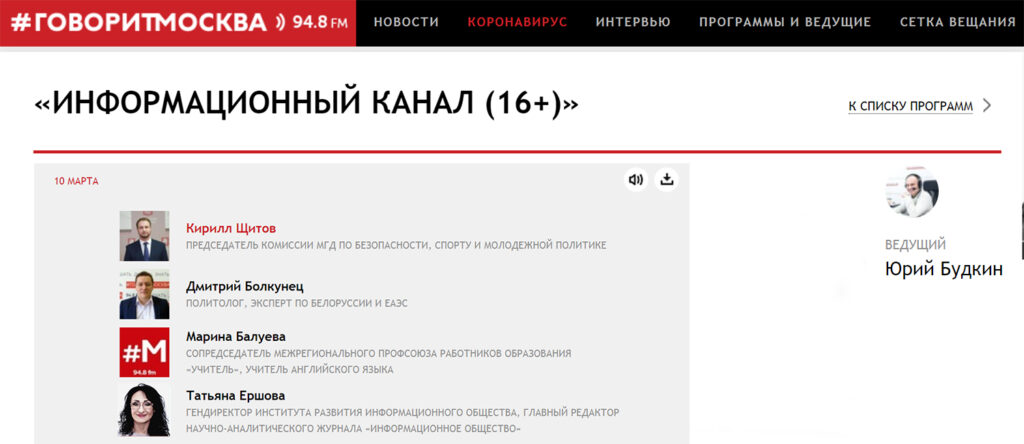
Tatiana Ershova took part in the discussion of the topic “State services may become inaccessible without biometrics” on the air of the radio “Govorit Moskva”

On March 10, 2021, at 16:00, the Information Channel program went on the air on the Govorit Moskva radio. The host of the program, Yuri Budkin, referred to a recent publication of the Kommersant newspaper, which commented on concerns that some public services might become inaccessible without biometrics. The Russian Ministry of Digital Development, Communications and Mass Media proposes to intensify the collection of biometric data: it is planned to increase the number of entries in the Unified Biometric System (UBS) from the current 164 thousand to 70 million in two years, that is, every second citizen of Russia should be present in the system. According to some statements, the ministry wants to stimulate such growth with the help of administrative measures: if you fail to submit your biometric data, you do not get access to a number of public services.

The host asked several questions to Tatiana Ershova, General Director of the Institute of the Information Society and editor-in-chief of the scientific and analytical journal “Information Society”.

The first question: Why is it not possible to obtain the consent of citizens to collect their biometric data, why do they not run to leave their biometric casts?

T. Ershova suggested not to generalize, since many citizens do it voluntarily and even with pleasure, realizing that thanks to this they quickly receive government services in a remote mode, which is very important in our time. Others resist this, and they have their own arguments. Therefore, it is worth talking about those who understand the importance of biometrics for receiving services (government and not only) remotely, and about those who are afraid to transfer biometric information, realizing that the security of personal data is a problem that can be solved quite well, but failures may take place at the same time.

Second question: What can be done with a person’s biometric data?

T. Ershova noted that criminals can penetrate into various spheres of our life, and here this, too, cannot be completely avoided. However, biometric data, in her opinion, is still more reliably protected than a paper passport or other document that can be stolen or lost due to absent-mindedness. And biometric data will be stored in a reliable UBS, which is now acquiring the status of a state information system. Its reliable operation is ensured by Rostelecom in accordance with the requirements of the Federal Security Service and Federal Service for Technical and Export Control. Of course, it happens that the system may not recognize the voice or face of a person, or, conversely, recognize the voice or face of a completely different person, but such failures are extremely rare, therefore T. Ershova advocates the introduction of biometrics in Russia, especially since this is a global trend. People believe that it will make our life more convenient and safer.

The third question: But only 164 thousand of more than 140 million believe, and the officials want 70 million to come in two years. Will it be possible to force the people?

T. Ershova stressed that no one is forcibly driving anyone anywhere. Recently, Yuri Parfenov, director of the department for the implementation of strategic projects of the Ministry of Digital Development, said that the use of biometric identification technologies would not be mandatory to receive government services. Yes, the authorities are trying to stimulate the spread of biometric identification, and here she fully supports the efforts of the state, which is moving towards the digital development. Now the indicator is still very low, but this can be explained by the fact that people do not have enough information. They need to be educated, and the mass media should be involved in this process. They must explain to the citizens what problems there may be, how to solve them and what advantages it gives, and there are many more of them than problems.

Fourth question: What are these advantages? If my face or my fingers are in the system, will I be served faster?

T. Ershova is sure that it will be faster. And this is especially important for the provision of remote services, which is very topical for some regions, where some services are poorly or not at all available face-to-face.

Access to the recording of the program can be obtained on the website of the radio station “Govorit Moskva” (in Russian).


Springer publishes a book by Alexander Raikov on the cognitive semantics of artificial intelligence

Springer, an international publishing company, has published the monograph “Cognitive Semantics of Artificial Intelligence: A New Perspective” by Alexander Raikov, member of the Supervisory Board of the Institute of the Information Society.

Alexander Raikov is doctor of technical sciences, full state advisor of the Russian Federation of the 3rd class, laureate of the RF Government Prize in the field of science and technology. He is also a leading researcher at the V.A. Trapeznikov Institute of Control Sciences of the Russian Academy of Sciences and a professor at MIREA – Russian Technological University.

“The book addresses the issue of cognitive semantics’ aspects that cannot be represented by traditional digital and logical means. The problem of creating cognitive semantics can be resolved in an indirect way. The electromagnetic waves, quantum fields, beam of light, chaos control, relativistic theory, cosmic string recognition, category theory, group theory, and so on can be used for this aim. Since the term artificial intelligence (AI) appeared, various versions of logic have been created; many heuristics for neural networks deep learning have been made; new nature-like algorithms have been suggested. At the same time, the initial digital, logical, and neural network principles of representation of knowledge in AI systems have not changed a lot. The researches of these aspects of cognitive semantics of AI are based on the author’s convergent methodology, which provides the necessary conditions for purposeful and sustainable convergence of decision-making, “- follows from the description of the monograph by Alexander Raikov.

Source: NCDE MSU, photo: Analytical Center for the Government of the Russian Federation.


IIS congratulates all women colleagues and partners on International Women’s Day

Dear colleagues and partners!

Please accept our most sincere congratulations on International Women’s Day and wishes of health and wonderful spring mood.

May good luck, interesting work and happiness in your personal life accompany you all year!


The first issue of the Information Society journal for 2021 is published

The full version of the 1st issue for 2021, in which 7 articles were published, can be viewed on the journal’s website.

At the end of last year, analyzing its publication activity, the editorial staff self-critically noted that some important topics were left without due attention. In the first issue of this year, this deficiency was partially overcome due to the placement of articles under the headings “Science and Innovations in the Information Society” and “Information Society and Law”.

Other articles of the issue were distributed under traditionally popular headings: “Digital Economy”, “Information Society and State Power”, “Education in the Information Society”, “Trust and Security in the Information Society”, “Information Society Technologies”.

The interest of scientists and researchers from other countries continues to please. This issue contains articles by authors from Azerbaijan and Belarus. Materials from Russia are presented by authors from Moscow and Vladimir. The editors hope that the geographical diversity of the portfolio will only grow over time.

It should be noted that thanks to the transition to a digital platform, the journal began to be published strictly on schedule, without a single day of delay. The editors, relying only on themselves and the authors, ceased to depend on the availability of external specialists, the difficulties of the printing house, and the vicissitudes of logistics. The publishing process has become easier and cheaper, valuable scientific materials are more accessible, and interaction with authors is less cumbersome.


Yuri Hohlov took part in the meeting of the Committee on Industrial and Innovation Policy of the Moscow Chamber of Commerce and Industry “Big Data: Technologies that Change Life”

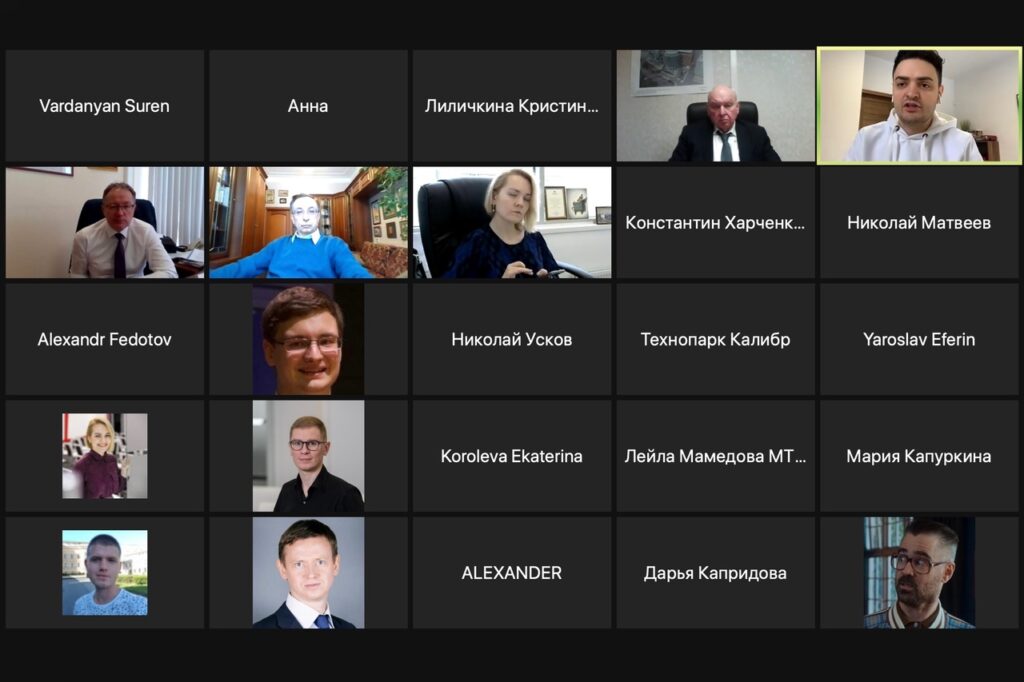
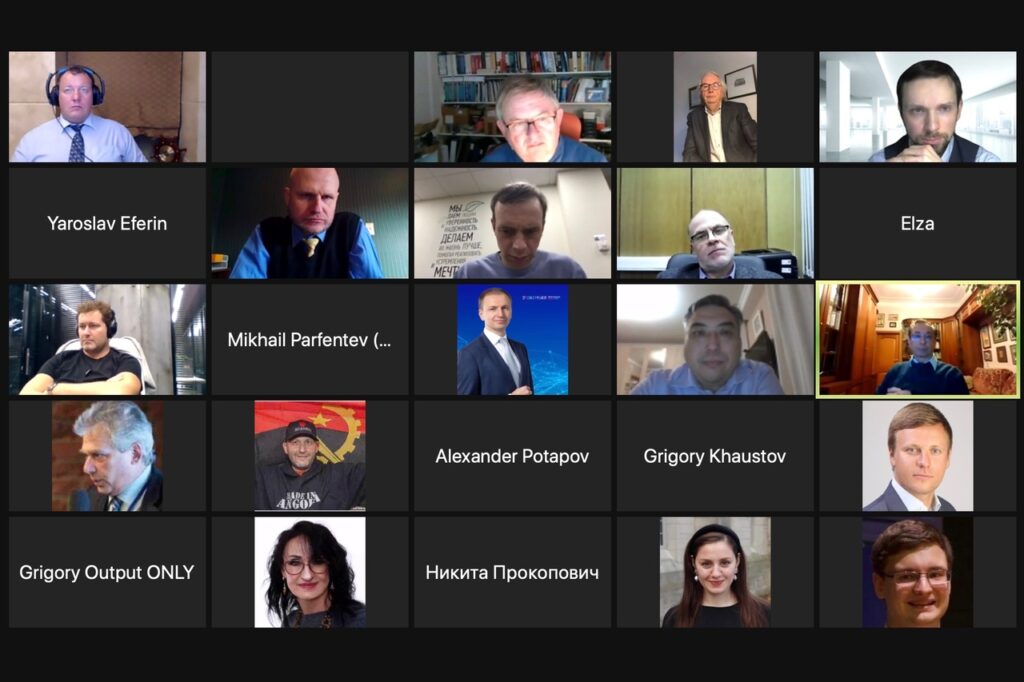
On February 25, a meeting of the Committee for Industrial and Innovation Policy of the Moscow Chamber of Commerce and Industry (MCCI) took place on the topic “Big Data: Technologies that Change Life”.

The meeting was opened by Mikhail Kogan, Chairman of the MCCI Committee on Industrial and Innovation Policy, Chairman of the Board of Directors of PJSC “Kalibr”, and Suren Vardanyan, Vice President of MCCI.

At the meeting, Yuri Hohlov, Chairman of the IIS Board of directors, Head of the Data Subcommittee (PC 02) of the Artificial Intelligence Technical Committee (TC 164), Head of the project “Monitoring and standardization of the development and use of big data technologies in the digital economy of the Russian Federation” of the NTI Competence Center at the Lomonosov Moscow State University made a report on “Standards in the field of big data“.

At the beginning of his presentation, the speaker gave the definition of the concept of “big data”, enshrined in the international standard ISO / IEC 20546: 2019 Information technology – Big data – Overview and vocabulary: they mean “big data sets, differing mainly in such characteristics as volume, the variety, processing speed and / or variability that require the use of scaling technology for efficient storage, processing, management and analysis. “

The expert also named the factors influencing the production, use and impact (economic and non-economic effects) of big data storage and analysis technologies. These factors include government policy and regulation, governance and financing mechanisms, human capital, R&D, digital infrastructure and information security.

At the international level, according to Yuri Hohlov, a set of standards for big data has already been formed, consisting of a terminology standard and a series of five standards for the reference architecture of big data. “Most of the industrial solutions offered by large vendor companies follow this reference architecture, so it is extremely important that the same reference architecture is implemented by our large companies and small enterprises that implement its individual components,” the speaker said.

Today, an international standard is being finalized for a framework for managing big data analytics, and work is beginning on a new series of four data quality standards for analytics and machine learning.

In Russia, work on the standardization of big data, according to Yuri Hohlov, is carried out by the Big Data Association, the Internet of Things Association, the Association of Data Market Participants, the NTI Competence Center for Big Data Storage and Analysis Technologies at the Lomonosov Moscow State University, the Institute of the Information Society, the Data subcommittee TC 164 “Artificial Intelligence” based on the Russian Venture Company.

TC 164 was created in 2019 as a national mirror image of the specialized international subcommittee ISO / IEC JTC 1 SC 42 Artificial Intelligence. The activities of the Data subcommittee are supported within the framework of the project “Monitoring and standardization of the development and use of big data technologies in the digital economy of the Russian Federation” of the NTI Competence Center at the Moscow State University. The staff of the Center participate in the activities of international working groups on standardization of big data and in the coordination of the development of national standards in this area.

To date, the Data Subcommittee has developed five draft national standards on big data, one of which is at the stage of regulatory control, two are at the stage of forming the final version, and two more are undergoing public discussion. “We want to quickly reduce the gap in standardization at the national level from international standardization. Therefore, we immediately launched the development of a series of national standards, in some cases identical, in some – modified in relation to international ISO standards, so that our data processing industry could use it, ”said Yuri Hohlov.

The NTI Competence Center at the Moscow State University has also developed a model of maturity for working with big data in an organization (Big Data for Digital Economy Maturity Model, BD4DE-MM) within the framework of the project “Monitoring and standardization of the development and use of big data technologies in the digital economy of the Russian Federation”. In 2020, based on this model, a methodology was piloted for (self)assessment of the maturity level of working with big data in an organization, and an online tool for (self)assessment was created, which will become publicly available in April. Thanks to this tool, according to Yuri Hohlov, each organization will be able to assess whether “it really has the whole set of conditions that will allow it to work effectively with big data.”

The BD4DE-MM conceptual diagram includes seven dimensions by which aspects of working with big data have been logically grouped. Five levels of maturity are also defined – sets of properties that an organization possesses. “It is extremely important for us to form our own domestic industry for working with big data, which includes a fairly large number of players – both manufacturers of relevant solutions and services, and technology developers,” added Yuri Hohlov.

The presentation by Yaroslav Eferin, the World Bank’s digital transformation consultant, was dedicated to the topic “Ethics of Data Use: International Regulatory Experience”.

“The topic of trust in data (and, in particular, the topic of data ethics) is one of the central topics of the forthcoming World Bank report on data policy in Russia. Over the past year and a half, in collaboration with representatives of government, business, academia and civil society, the World Bank has conducted a study to identify key strategic objectives for the implementation of data policy in Russia. On the basis of numerous consultations and interviews … a report was prepared, its presentation will take place approximately in April / May of this year,” Yaroslav Eferin said.

One of the Russian authors of the report is Yuri Hohlov.

The following speakers also spoke at the MCCI meeting:

  • Alexey Frolov, founder of Biometrics Labs, vice president of the Association of Artificial Intelligence Laboratories;
  • Edgar Grigoryan, General Director of ATF MEDIA.

Source: https://bigdata.msu.ru/news-post/174


Yuri Hohlov gave a topical comment on the Telegram messenger

On January 25, 2021, the chairman of IIS Board of directors Yuri Hohlov gave an interview to the information channel “Actual Comments”, which specializes in the comments of well-known experts on the most important events of the day.

Yuri Hohlov noted that Telegram is unlikely to become the main and only communication channel in the near future.

“Today’s usage statistics show that it is still far behind WhatsApp and other means of communication, such as VKontakte. Telegram will simply be one of those channels, and there will be no monopoly at all.

Secondly, all social networks or communication systems must follow the laws of the country where they operate. From this point of view, if calls for violation of the law, overthrow of the constitutional order or other illegal actions appear in certain communication platforms or social networks, then any social network or communication platform is obliged to follow national legislation and block such actions. There is nothing new here in relation to what was before and what is now. Both here in Russia and in other countries.”

The full material on this topic can be found directly on the AС website (in Russian).


An expert session “Reaping Data Dividends for Socio-Economic Development” was held under the auspices of the World Bank

On January 20, 2021, the online cycle of expert sessions on data policy issues “Data as a key factor in the competitiveness of the Russian economy” was continued. As part of the third session of the cycle, an expert discussion “Reaping Data Dividends for Socio-Economic Development” took place. The session was organized by the World Bank in cooperation with the Center for Strategic Research with the support of the Institute of the Information Society to clarify the provisions of the forthcoming World Bank report on data policy in Russia.

The World Bank study is based on a conceptual framework for analyzing national data policies in the world’s leading countries, which consists of three main components: 1) data as infrastructure (policies designed to ensure reliable data management); 2) trust in data (policies that create and maintain trust in the data ecosystem and related institutions); 3) value through data (a policy that encourages and facilitates the creation of value through data). The last component was discussed on January 20: experts discussed how to extract dividends from data for socio-economic development.

The discussion was moderated by Oleg Petrov, lead digital transformation specialist of the World Bank, and Alexander Malakhov, head of digital development at the Center for Strategic Research.

“Over the past year, the World Bank has prepared a draft analytical report on data policy in Russia. We talked with representatives of the state, science, private business, civil society … Previous conversations brought us a large number of very important and necessary comments. Our team is currently working on updating the sections of the report that we discussed earlier. Today we propose to talk about how data can bring benefits, how governments facilitate these processes, what policies they follow and where this leads us,” said Renaud Seligmann, Country Director for Russia of the World Bank, in his opening remarks.

“Sharing the approach that it is necessary to increase the value of data for users (both business, government and citizens), I think it would be important … to talk not even about the actual state of affairs, but rather about how to design structures in sectors that are not yet sufficiently digitalized, … to talk about the data that have not yet been generated and which we expect to grow in the near future. In particular, the report pays considerable attention to the issue of industrial data and data that will be generated through the platforms in different sectors,” said Vladislav Onishchenko, president of the Center for Strategic Research.

Andrew Stott, one of the co-authors of the report, lead advisor to the World Bank on digital transformation, formerly head of data.gov.uk, described how data creates value in terms of public services (improving the quality of services, prioritizing resources, accountability of public officials), production of goods and services (improving quality, reducing costs, introducing innovations), optimizing the economy (matching supply and demand, reducing barriers to market entry, transaction costs), developing a data-driven business (platforms, data intermediaries, skills-based services and competences).

“More value can be derived from data if users can access more data — not just their own data, but data from other sources,” said Andrew Stott. At the same time, data flows (from data creators to the user) have different directions: B2B, B2G, G2B and G2G. Each of the directions corresponds to certain mechanisms for accessing a large amount of data.

Yaroslav Eferin, World Bank digital transformation consultant, Russian co-author of the forthcoming report, voiced preliminary recommendations on the value of data to the national government. Recommendations are divided into several blocks: data sharing (B2B, B2G, G2B and G2G), data ownership, digital platforms, digitalization of industry, attraction and development of digital businesses, skills and competences. In particular, within the blocks on digital platforms and digital industry, it is recommended to support the development of standards in the field of data.

Declan Deasy, former director of DIGIT, European Commission, spoke about the EU’s data policy: “The European Union has a data strategy for this year. It is fully geared towards the future, towards the creation of a pan-European data space, the reusability of data from the public and private sectors, the exchange and sharing of data by enterprises, investors and so on. The Common European Data Space is, in fact, a space that ensures the uninterrupted exchange of data for both the private sector, government departments and science …, infrastructure for data sharing, exchange of competences, the creation of appropriate governance structures and the formation of a regulatory framework. These are all European Union priorities for green recovery, and data will play a key role here.”

According to Yuri Hohlov, one of the Russian co-authors of the report, chairman of the IIS board of directors, head of the project “Monitoring and standardization of the development and use of big data technologies in the digital economy of the Russian Federation” carried out by the NTI Big Data Competence Center at Moscow State University, the fact that European Union adopted a data strategy was associated with its significant lag behind the United States and China in the field of working with personal data, as well as with the concentration of huge amounts of this data with transnational corporations. “The European Union has made sure that at least industrial data can be accumulated and dividends can be extracted from them. In the same way, Russia needs to proactively form its own data policy,” said the expert.

“The issues of ensuring semantic interoperability and a nationwide system of reference data in Russia have not yet been resolved, therefore, alas, we cannot talk about a single data space unlike the European Union. Therefore, a recommendation was formulated for the development and approval of a national data strategy in the Russian Federation,” noted Yuri Hohlov.

The recommendations presented in the draft report were further commented on by Russian experts:

  • Boris Rabinovich, Chief Data Officer, SBER;
  • Alexander Malakhov, head of digital development, Center for Strategic Research;
  • Anatoly Dyubanov, minister of digital development and communications, Government of the Novosibirsk Region;
  • Elza Ganeeva, government relations manager, Microsoft;
  • Mikhail Parfentiev, advisor for digital projects, Megafon PJSC;
  • Dmitry Ter-Stepanov, deputy general director, director for normative regulation, Digital Economy NPO;
  • Sayan Dorzhiev, sales director, Gartner.

Yuri Hohlov summed up the discussion: “One of the main recommendations is that Russia needs its own national data strategy, as well as a roadmap or action plan for its implementation. The sooner such a strategy is formulated and adopted, the better. The main goals of the strategy should be those socio-economic effects, dividends that are achieved in the course of its implementation. It is very important to look at working with data across the entire complex of cross-cutting digital technologies. It can be said that Russia has a national AI strategy, which reflects the position that artificial intelligence technologies rely on working with big data, but this strategy concerns only AI, while other cross-cutting digital technologies such as IoT or blockchain are not taken into account.”

The expert added: “When the discussion and approval of the national data strategy are in place, it is extremely important to involve all the main stakeholders: government, business, civil society (including direct customers), academia, who work with data in their own ways and for whom it is also important to share them. The strategy should also address issues of data ownership: although we use this term, in our legislation this concept is still not regulated either at the normative or at the technical level, so we have to come up with some euphemisms for how to possess data. This does not always allow investors and large companies to invest in data economy projects, as there is a risk of losing investments.”

The authors of the report thanked the experts for their helpful comments, which will be taken into account when finalizing the report. It is planned that its preparation will be completed in the next month.

The event was attended by Tatiana Ershova, IIS general director, coordinator of partnerships development at the NTI Competence Center for Big Data (Moscow State University), as well as Viktor Stroganov, IIS executive director, Peter Ershov and Alexander Katin, heads of IIS directorates, Vadim Galperin, IIS leading specialist.


Tatiana Ershova gave a comment to the Zvezda TV and radio channel

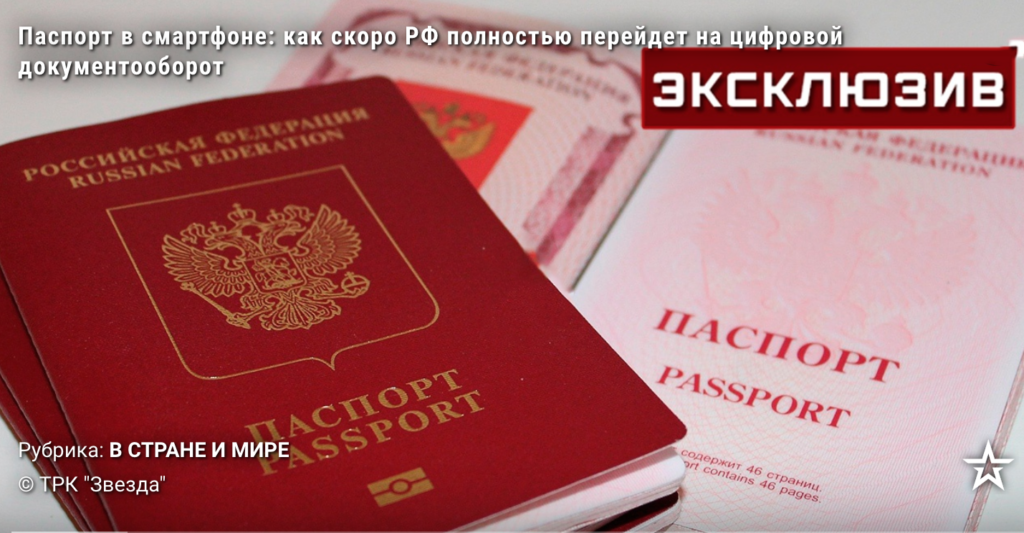
On January 18, 2021, Tatyana Ershova, general director of the Institute of the Information Society, editor-in-chief of the scientific and analytical journal “Information Society”, gave a comment to the Zvezda TV and radio channel on the widespread introduction of electronic passports, driver’s licenses, work books and other important documents accompanying our life.

T. Ershova highlighted the role of the country’s leadership and the Ministry of Digital Development in the promotion and implementation of large-scale digitalization, urging all media to actively engage in enlightening work. Citizens need to be educated about the benefits of using digital technologies and the risks associated with the transition to digital documents.

T. Ershova is a great enthusiast of using digital opportunities and is quite optimistic about the pace of citizens’ transition to basic digital documents: it may take years (about 5 years), but not decades. One needs to understand that in such a huge country like Russia, the possibilities of introducing digital documents in different regions vary greatly, and here the terms can be very different. Much will depend on the political will of government and business leaders.

It is imperative when campaigning for “digital citizens” to train people to protect themselves from fraud that could seriously harm them. In general, the problem of personal data protection and the development of a culture of cybersecurity should be addressed nationwide, so that every citizen can feel protected and get the most out of the transition to new document formats and the rejection of paper.

More details with the commentary can be found on the page of the “Zvezda” channel (in Russian).


On January 20, 2021, the third expert session “How to extract dividends from data for socio-economic development” will be held as part of a cycle of expert sessions on data policy

The World Bank, in collaboration with the Institute of the Information Society and other Russian partners, is organizing a series of expert sessions on data policy “Data as a key factor in the competitiveness of the Russian economy”.

The discussion cycle consists of three sessions, the first of which, organized jointly with the National Center for Digital Economy of Moscow State University, was devoted to discussing Russia’s policy in the field of ensuring trust in the data ecosystem.

The second session, organized jointly with the Agency for Strategic Initiatives, addressed policy issues for managing data throughout its life cycle.

We invite you to take part in the third expert session, which will be held on January 20, 2021 in the online conference mode from 16.30 to 18.30 Moscow time.

The topic of the upcoming conference is “How to extract dividends from data for socio-economic development.”

This session, co-hosted by the World Bank and the Center for Strategic Research, will discuss current Russian policy issues related to the value of data for the country’s socio-economic development.

The session will be moderated by Vladislav Onishchenko, president of the Center for Strategic Research, and Oleg Petrov, lead digital transformation specialist of the World Bank. Among the speakers: Renault Seligman (Country Director for Russia of the World Bank), Andrew Stott (senior consultant of the World Bank, formerly Head of data.gov.uk) and Declan Deasy (formerly director of DIGIT, European Commission) and leading Russian experts.

If you wish to participate in the session, please inform the following contact persons by January 18, 2021:


With the participation of IIS, a draft national standard on the framework and application process of the big data reference architecture has been developed


The Technical Committee for Standardization “Artificial Intelligence” (TC 164) functioning on the basis of RVC submitted the first version of the standard “Information Technologies. Reference Architecture for Big Data. Part 1: Structure and Application Process” for public discussion. The draft standard was developed by the National Center for Digital Economy of Lomonosov Moscow State University and the Institute of the Information Society.

The above mentioned national standard is one of five standards, which refer to the big data reference architecture and is a Russian-language adaptation of the international technical report ISO/IEC TR 20547-1:2020 Information Technology – Big Data Reference Architecture – Part 1: Framework and Application Process.

The draft national standard contains a description of the framework of the big data reference architecture, and also provides a solution to the problem of mapping the possible big data use cases in the reference architecture. The provisions of the national standard can be used by organizations to consistently describe their architecture and its implementations with respect to the roles/actors and their concerns as well as the underlying technology.

The document provides a conceptual view of the big data reference architecture, as well as the underlying concepts: reference architecture, interest, stakeholder, scope, architecture framework, user and functional views, application process, stakeholder identification, etc.

The presented draft national standard, along with other parts of the ISO / IEC 20547-X international series of standards, will contribute to the effective use of the big data technology to solve economic and social problems in the implementation of the national program “Digital Economy of the Russian Federation”.

“The big data reference architecture presented in the standard will ensure the interoperability of big data systems created in the country, their compatibility and opportunities for further development. The creation of a national big data ecosystem is impossible without complying with the general requirements of working in a distributed environment, and a series of international standards ISO / IEC 20547-X, consistently adapted as national standards, serves this purpose,” says Yuri Hohlov, chairman of the Data Subcommittee (PC 02) as part of TC 164.

The draft standard was developed by the National Center for the Digital Economy of Moscow State University (within the framework of the project of the NTI Competence Center for Big Data Storage and Analytics) and the Institute of the Information Society. The coordination of work on the agreement and approval of the document is carried out by PC 02 “Data” on the basis of Moscow State University, operating as part of TC 164 “Artificial Intelligence”.

The first version of the standard is available at bigdata-msu.ru/standards. Comments on the project are accepted by e-mail bigdata-wg02@digital.msu.ru until February 27, 2021. Based on the results of public discussion, the version of the standard will be supplemented and approved by TC 164 “Artificial Intelligence”, after which the document is planned to be submitted to Rosstandart.

Source: https://www.rvc.ru/press-service/news/company/160376/

National Center for Digital Economy (NCDE), Lomonosov Moscow State University, was founded in 2017 by decision of the Board of Trustees of Moscow University at a meeting chaired by Russian President Vladimir Putin. The purpose of the Center is to promote the digital economy development in Russia. In 2018, the NTI Competence Center for Big Data Storage and Analytics was created within the NCDE structure. The activities of PC 02 are supported by the NTI Competence Center for Big Data Storage and Analytics at the Moscow State University.

The Institute of the Information Society is an independent research and service organization established in 1998 at the initiative of renowned specialists in the field of information technology, telecommunications and information policy with the aim of developing the information society in Russia.

The Technical Committee for Standardization “Artificial Intelligence” (TC 164) was created in 2019 at the initiative of RVC with the support of the Ministry of Industry and Trade of the Russian Federation and Rosstandart. TC 164 is a national mirror of the relevant international subcommittee ISO/IEC JTC 1 SC 42 “Artificial Intelligence”. As part of TC 164 there is a subcommittee “Data” (PC 02), whose secretariat is run by the National Center for Digital Economy of Moscow State University.