Category: News


The Institute of the Information Society celebrates its 25th anniversary

On September 7, 2023, the Institute of the Information Society celebrated its 25th anniversary.

The area of ​​professional activity of IIS is research, analytics and consulting, legislative, publishing and educational activities on a wide range of problems of information society and knowledge economy, as well as R&D and system integration in the field of creating modern information technologies, including design and implementation of different ICT solutions from the infrastructure level to the level of applied expert systems.

The institute’s customers are federal and regional authorities, federal scientific foundations, large commercial companies, state unitary enterprises, state institutions, universities, research institutes (including the RAS systems), non-profit organizations, international organizations.

The IIS achievements list includes a number of major projects: conceptual and methodological documents of national and international significance; projects for the development, implementation and examination of projects related to the electronic development of Russian regions; analytical reports on the readiness of Russia and its regions for the information society, which have been published regularly since 2001.

In total, the Institute has held more than a hundred events at the regional, national and international levels, published over 30 books on a range of problems of the information society.

Since 1999, the Institute, together with the Russian Engineering Academy, has been the publisher of the scientific and analytical journal “Information Society”, the only publication in Russia that comprehensively and systematically covers the problems of the information society development. In 2010, the journal was included in the List of leading peer-reviewed scientific journals and publications, approved by the Higher Attestation Commission of the Ministry of Education and Science of Russia, and in 2015 it confirmed its status. Also, since 2015, the journal has been included in the Russian Science Citation Index on the Web of Science platform.

Leading experts of the institute have participated in the implementation of a number of initiatives promoting the use of ICT for comprehensive development in Russia, in particular: Public Expert Council of the Moscow City Duma in the direction of “Information, Informatization, Communications, Telecommunications and Television” (1998-2001), then transformed into the Public Expert Council of the Moscow City Duma on the Development of the Information Society (2002-2006); Council under the President of Russia for the Development of the Information Society (2009-2012); expert council under the Government of the Russian Federation (2014-2018); Council for Digital Transformation of ANO “Digital Economy”; the working groups of ANO “Digital Economy” on digital governance and artificial intelligence; subcommittee “Data” (PC 02) as part of the Technical Committee for Standardization “Artificial Intelligence” (TC 164) on the basis of RVC, etc.

Institute leaders at the highest expert level participated in international initiatives, including The Global Bangemann Challenge (1998-1999), then converted to the Stockholm Challenge (2000-2010); Global Junior Challenge (1999-2009); The Digital Opportunity Task Force (DOT Force) (2000-2001); UN ICT Task Force (2002-2005); Global Alliance for Information and Communication Technologies and Development (GAID) (2006-2012); WSIS Action Line C7 e-Government of the action plan for the implementation of the decisions of the World Summit on the Information Society (2012-2017); Working Group on the Measurement and Evaluation Tool for E-Participation Readiness (METEP), formed by the Division of Governance and Development of the United Nations Department of Economic and Social Affairs (2013-2015), etc.

The Institute today employs people of various specialties, ages and nationalities. They constitute a powerful intellectual and creative union of like-minded people, thanks to which the Institute was able to overcome all difficulties and become a recognized “expert of the first choice”, an independent leader of Russia in the development of the information society. We congratulate all IIS employees and partners on the 25th anniversary of the company and wish you all good health, good mood and enduring faith in success!
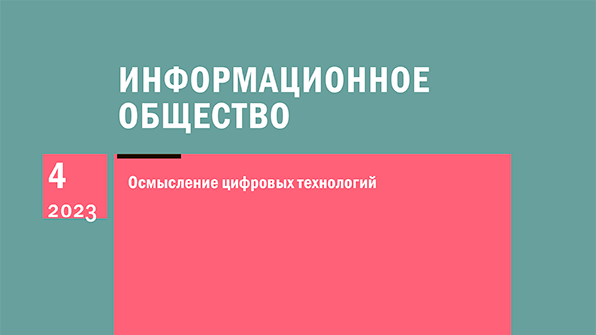

   

The fourth issue of the Information Society journal for 2023 has been published

The issue is dedicated to the memory of Viktor Glushkov in connection with his 100th birthday.

In a traditional address to readers, editor-in-chief Tatiana Ershova writes:


On August 24, 1923, in Rostov-on-Don, the pioneer of computer science and cybernetics, the ideologist of the digital state, Viktor Mikhailovich Glushkov was born in the family of a mining engineer.

Based on the works of N. Wiener, K. Shannon, A. I. Kitov, A. A. Lyapunov and other scientists, V. M. Glushkov formed his own understanding of cybernetics as a scientific discipline, which he interpreted broadly – as a science of general patterns, principles and methods of information processing and management of complex systems. This understanding was reflected in the world’s first “Encyclopedia of Cybernetics”, prepared on the initiative of V. M. Glushkov and published in 1974 under his editorship.

V. M. Glushkov paid much attention to the creation of automated control systems (ACS), was the main ideologist and one of the main creators of the ACS industry in the USSR. Applied developments of V. M. Glushkov and his school covered a wide range of areas of application.

In 1962, on the instructions of A. N. Kosygin, then the first deputy chairman of the Council of Ministers of the USSR, V. M. Glushkov began the development of a project for the National Automated System for Collecting and Processing Information for Accounting, Planning and Management of the National Economy (OGAS). He proposed the concept of OGAS as a single system that implements the principles of program-target management and intersectoral balance using scenario modeling. In fact, it was a prototype of the digital state that the USSR could become. But the OGAS project met with sharp objections from the leadership of the Central Statistical Bureau of the USSR, then it was being revised for a long time, but has never been implemented. There were many reasons for this, and the main one was the resistance of the social system itself, which was not ready for a breakthrough development of this kind.

At the dawn of the information society, he promoted the ideas of artificial intelligence and digital immortality. His students and followers successfully develop his ideas and are engaged in research on structural pattern recognition, methods of syntactic analysis of images and speech signals, methods of structural analysis of scenes in the field of view of robots, are engaged in neurocomputer technologies and medical information systems. However, as before, many ideas of V. M. Glushkov are waiting for their implementation.

For his great contribution to the development of science and technology and the application of these achievements, V. M. Glushkov received well-deserved recognition and a large number of awards both at home and abroad. He was active internationally, and one of his activities was the role of adviser to the UN Secretary-General on cybernetics and computing and their use in developing countries.

We dedicate this issue of the journal to the blessed memory of V. M. Glushkov, an outstanding son of our people.


IIS at the ARMY-2023 Forum

The IIS leader took part in several events of the international scientific and technical forum “ARMY-2023”.

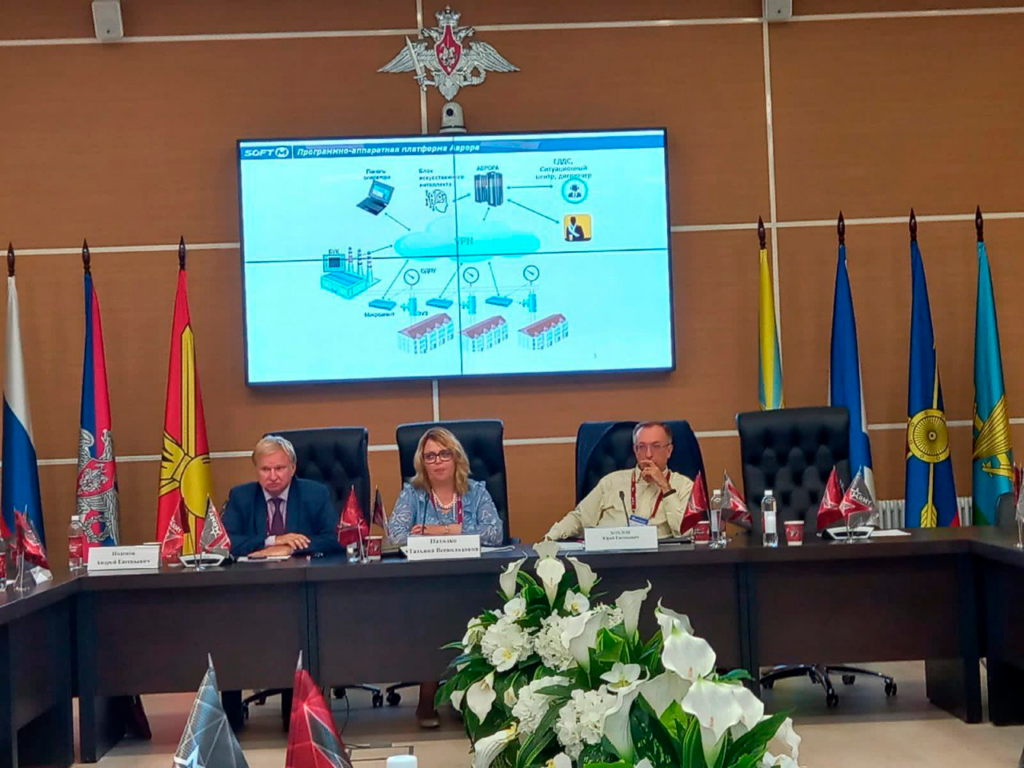
Yuri Hohlov, Chairman of the IIS Board of Directors, full member of the Russian Academy of Engineering, together with Tatyana Pakholko, Vice President of the Moscow Association of Entrepreneurs, member of the Interdepartmental Working Group of the Collegium of the Military Industrial Commission of the Russian Federation on Diversification, co-moderated the round table “Industrial Infrastructure Development. Technological readiness. New Opportunities”, which took place on August 15, 2023.

The subject of discussion was the development of the industrial infrastructure of Russian regions and the use of the achievements of digital transformation at the regional level. The discussion was attended by representatives of regional executive authorities, state corporations, industrial enterprises of the defense industry and public organizations.

Among the speakers were the Minister of Industry, New Technologies and Natural Resources of the Chelyabinsk Region Pavel Ryzhiy and the Director of the Chelyabinsk Region Industry Development Fund Sergey Kazakov; the Director of the Association of Clusters, Technoparks and Special Economic Zones of Russia Mikhail Labudin; the Director of the Biomedical Union Mikhail Losev; the Leading Engineer of the National Research Center “Kurchatov Institute” – Central Research Institute of structural materials “Prometheus” Oleg Glibenko and others.

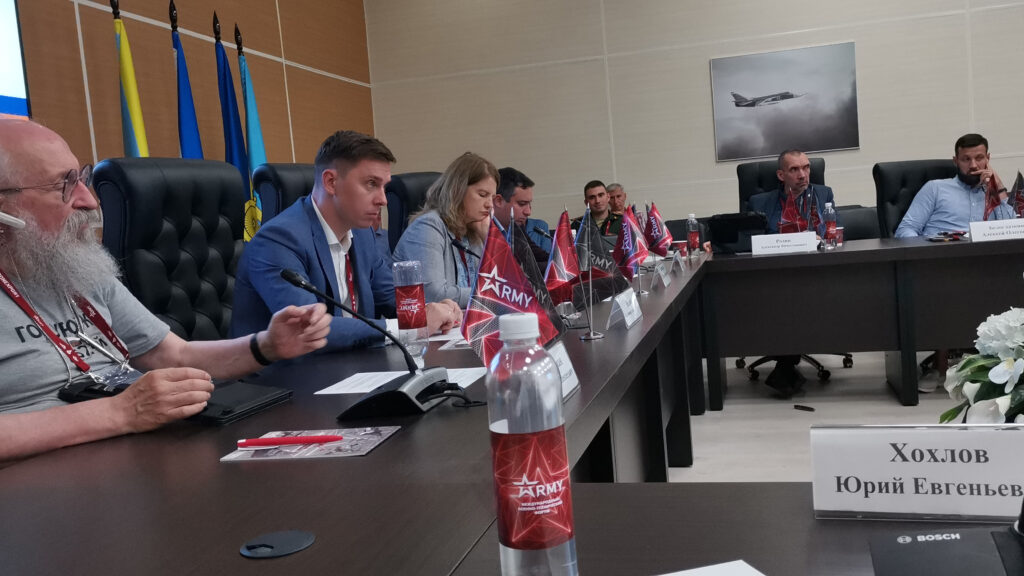
On August 16, 2023, within the framework of the Congress “Strategic Leadership and Artificial Intelligence Technologies”, which traditionally takes place within the framework of the ARMY Forum, a meeting of the section “Artificial Intelligence Technologies: From Science to Practice” was held, at which the results and prospects for implementation of AI technologies in order to create synergy between business, science and education were discussed.

The event was attended by 18 speakers, including Natalya Kasperskaya, President of the InfoWatch Group of Companies; Anatoly Vasserman, Deputy of the State Duma of the Russian Federation; Alexei Semenov, full member of the Russian Academy of Sciences, Head of the Department of Mathematical Logic and Theory of Algorithms at Lomonosov Moscow State University, and President of the RUSSOFT Association Valentin Makarov . The event was moderated by Vice-Rector for Science of Peter the Great St. Petersburg Polytechnic University Vladimir Nelyub.

rbt

The speakers paid special attention to the challenges and risks of the development and use of AI, the need for close cooperation between researchers, developers and consumers of AI-based products, including the necessity to ensure the sovereignty and technological leadership of the Russian Federation in this area. The problems of training and retaining IT specialists in the country under sanctions in order to create import-independent domestic solutions based on AI that are not inferior or superior to foreign counterparts in terms of technical characteristics were noted.

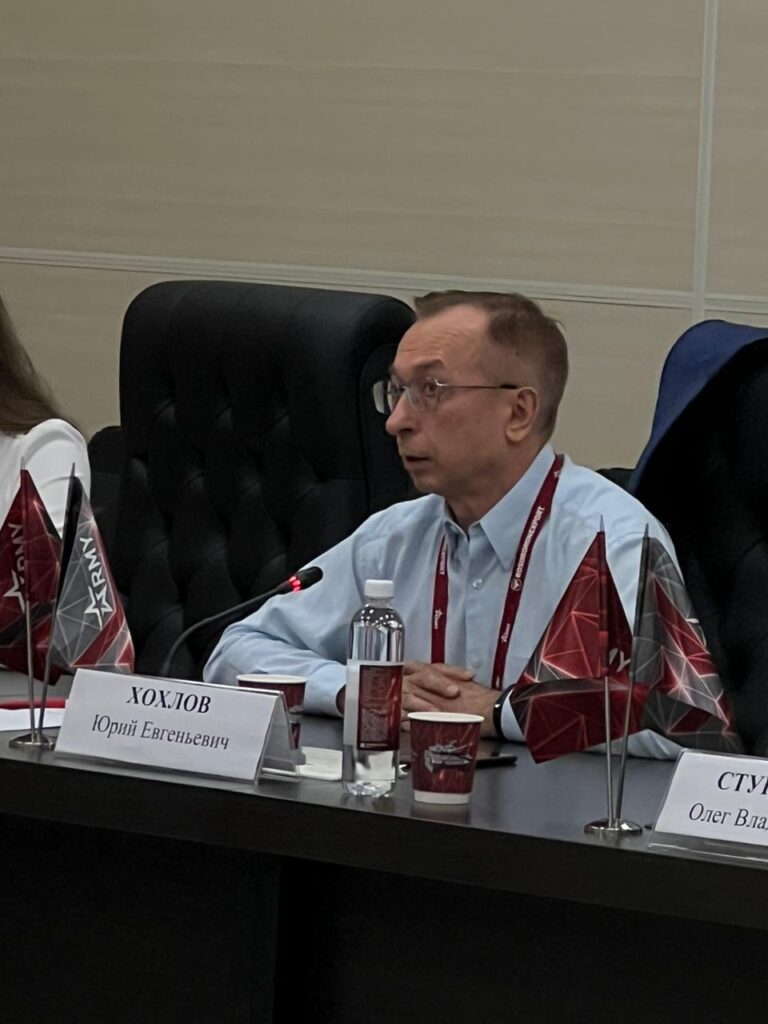
Yuri Hohlov made a presentation on “The landscape of international standardization of artificial intelligence”, emphasizing the importance and need for the formation of national standardization in the field of AI, which allows the transfer of accumulated knowledge and successful practices in the creation and use of AI systems.

Another session of the Congress “Strategic Leadership and Artificial Intelligence Technologies”, held on August 18, 2023, was devoted to the legal regulation of AI technologies, including discussion of the subject of the upcoming draft federal law on artificial intelligence.

The discussion participants focused on the problems that should be resolved in the future law, balancing the interests of government, business and citizens, developers and consumers of AI products, taking into account the specifics of using AI in various fields of activity.

Among the speakers were Senator of the Federation Council Konstantin Dolgov, Director of the National Center for the Development of Artificial Intelligence under the Government of the Russian Federation Sergey Nakvasin, Managing Director of the AI Regulation Center of Sberbank Andrey Neznamov, President of the RUSSOFT Association Valentin Makarov, Head of the Department of the Ministry of Digital Development of Russia Veronika Strogoleva, Director of the Department of Regulatory and methodological support of the Federal Center for Applied Development of Artificial Intelligence Andrey Chukarin and others.


The third issue of the journal “Information Society” for 2023 has been published

The third issue of the scientific and analytical journal “Information Society” for 2023 has been published.

The main theme of the release is “Interaction of human and technology”. It is revealed in 13 articles devoted to the following:
Again, about the essence of the information society
Existential landscape of human-machine interaction
Hate speech on social media
Digitalization of Russian regions and interregional cooperation
Cryptocurrencies as a new form of money
Telecommunication market today
Standardization of data technologies for AI
Crop protection robots
Digital transformation in China
Use of quantum technologies in the USA

In her address to readers, the editor-in-chief of the magazine Tatiana Ershova wrote:

The first article in this issue, written by MSU professor Tamara Naumenko, examines the paradigm foundations of the information society theory. This made me remember the very beginning of our activities to promote the development of the information society in Russia at the end of the last century or, if you like, the millennium. We wondered why seemingly reasonable people resisted it so much. But over the years, things have become clearer.

Our opponents were patriotic people. It was exactly what puzzled us: don’t we want Russia’s good, don’t we want its powerful development? It was very difficult to prove that we were not eager to sell our country out to the West. It was necessary to explain long and hard that no one can build a modern economy without the use of new technologies. And since, due to wrong decisions, we have missed the opportunity to independently create technologies and equipment on a par with the West, why not to use what we already have and what we can buy for our own purposes? Of course, in parallel it was possible and necessary to create our own technologies, and on a serious scale. And those who called for the information society were certainly not responsible for the fact that this did not happen.

It is surprising that people did not believe us for a long time and stubbornly could not understand that we are in the same system of values with them, that we are carriers of the same paradigm, if the latter is understood in a broad sense as a worldview, or way of thinking. We actively participated in the most prestigious international events and projects in order to keep abreast of everything most interesting and useful, and then we came home and tried to promote the most advanced experience in our country, taking into account its peculiarities. We also organized major events in Russia: the annual conference “Information Society Technologies”, “Tver Forum”, as well as many round tables and seminars, to which we invited well-known Russian and foreign experts, true leaders of the information society.

One of such events was the international conference “Global Knowledge – Russia. Partner Networks as Instruments for the Development of the Information Society and the Knowledge Economy”, which took place in Moscow on December 9, 2002. It brought together more than 100 representatives of the state, business, civil society, the scientific and educational community from 19 countries of the world. Here, for the first time, the preparation of the national strategy “Russia in the Information Age” was announced, about which the First Deputy Minister of the Russian Federation for Communications and Informatization A.V. Korotkov (blessed memory of him), spoke in detail. A document under this title was not approved, however, but as a result of its discussion, a certain new concept of “informational development of the country” arose. The next version of the document, called the “National Strategy for Informational Development”, already set “advanced informational development” as a major task.

On February 7, 2008, the long epic ended: thanks to the active support of the Security Council, the Presidential Decree approved the “Information Society Development Strategy”, which fully took into account Russia’s national interests. Common sense finally prevailed, and a lot of ICT4D work began countrywide. It actively continues to this day, only now with an emphasis on the use of digital technologies.


Yuri Hohlov made a presentation at a meeting of the Directorate of the Ministry of Defense for Artificial Intelligence

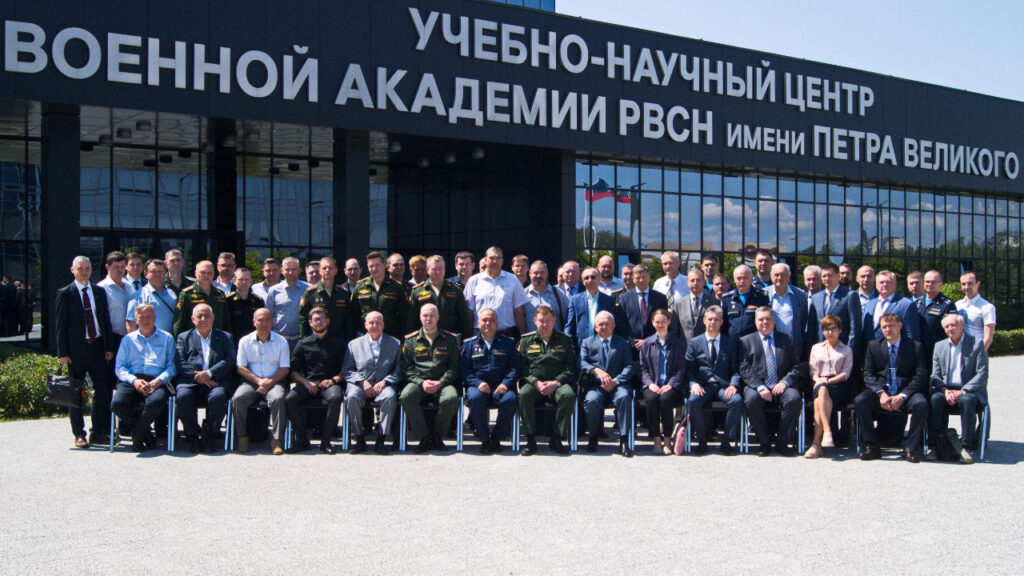
On June 15, 2023, the Department for the Development of Artificial Intelligence of the Russian Ministry of Defense held a meeting of the Directorate on the formation of a regulatory framework and the training of highly qualified personnel in the field of artificial intelligence.

The meeting was attended by representatives of more than thirty enterprises of the defense industry, scientific and educational organizations of the Russian Ministry of Defense and military authorities.

The meeting discussed the development of standards in the field of artificial intelligence at the international and national levels, the relevance of developing a methodology, technology and software for a domestic integrated intelligent decision support system for the use of subordinate troops (forces) in armed conflicts, as well as making changes to educational master’s and specialist’s higher education programs and professional retraining programs for military specialists in the field of artificial intelligence technologies in June 2023.

During the event, the participants discussed the development of national standards governing the terminology and classification of systems with artificial intelligence, the need to use artificial intelligence in modeling complex dynamic systems, proposals for amending the educational programs of higher education for master’s and specialist’s programs and professional retraining programs for military specialists in the field of AI technology.

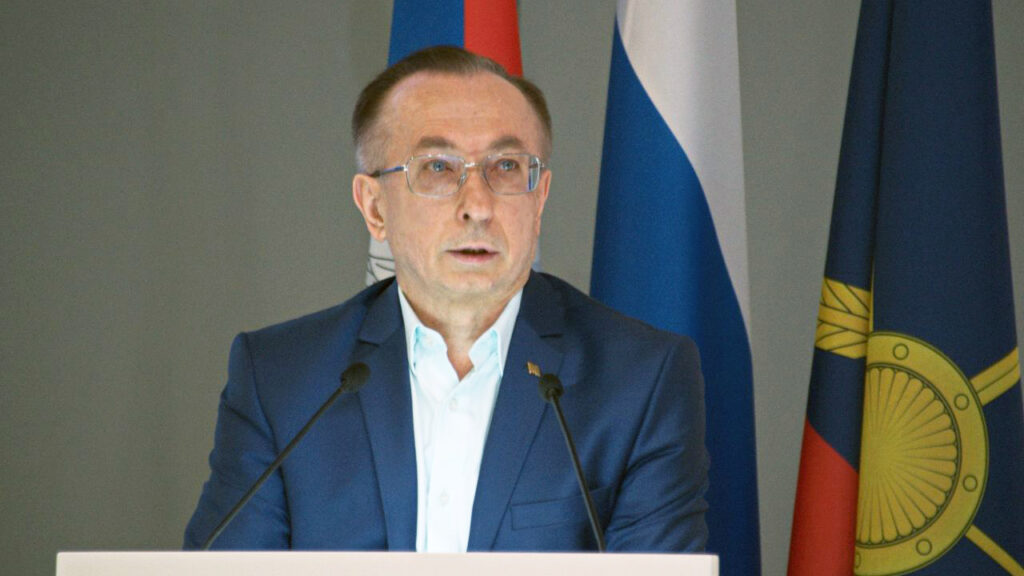
Chairman of the Board of Directors of the Institute for the Development of the Information Society, Chairman of Subcommittee “Data” of the Technical Committee on Standardization “Artificial Intelligence” (TC 164) Yuri Hohlov made a presentation “International and national standardization in the field of artificial intelligence”.

As a result of the meeting, experts made proposals for the development of modeling systems with artificial intelligence, for personnel training and the formation of a regulatory framework in the field of artificial intelligence technologies.

Source: Department of Information and Mass Communications of the Ministry of Defense of the Russian Federation


Congratulations to all on World Telecommunication and Information Society Day

Dear colleagues, partners, friends!

May 17 has been World Telecommunication Day since 1969. This day was established by the Plenipotentiary Conference held in Malaga Torremolinos in 1973 to commemorate the founding of the International Telecommunication Union (ITU) and the signing of the first International Telegraph Convention in 1865.

In November 2005, the World Summit on the Information Society called on the UN General Assembly to designate 17 May as World Information Society Day to highlight the importance of ICT for development and to focus on a wide range of issues related to the information society. In March 2006, the General Assembly adopted resolution 60/252, which established that World Information Society Day should be celebrated annually on 17 May.

In November 2006, at the ITU Plenipotentiary Conference in Antalya (Turkey), it was decided to celebrate May 17 as World Telecommunication and Information Society Day. The updated resolution 60/252 invites Member States and sector members to commemorate this day every year through the organization of appropriate national programs.

The theme of World Telecommunication and Information Society Day 2023 is “Empowering Least Developed Countries through Information and Communication Technologies”. ITU, where Russia’s positions have traditionally been strong, is calling on the public and private sectors to commit to universal connectivity and digital transformation in these countries through its Partner2Connect digital coalition. ITU notes that investments in these young, dynamic countries can provide sustainable growth for generations.

We hope that ICT will be an effective instrument of development, not colonization. We strongly stand for a fair information society. Happy holiday!


Congratulations on the anniversary of the great Victory!

Dear colleagues, partners, friends!

Congratulations to all on the 78th anniversary of the great Victory over nazism. Let us honor the memory of all those who died on the fronts of the Great Patriotic War, kneel before the living veterans of the war and those who helped achieve the Victory in the rear. Let us do our best to eradicate nazism that raised its head in the backyard of history and stop the unbridled hegemonism. We wish victory to those who are now courageously fighting on the fronts for our just cause.

Happy Victory Day!


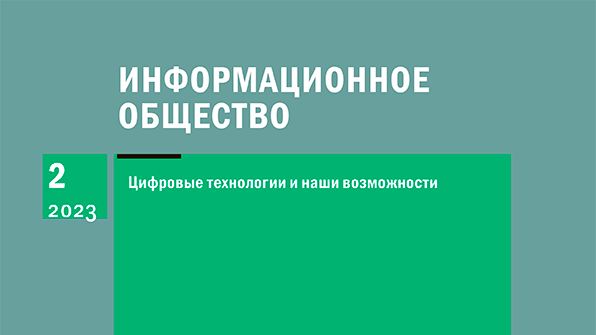
The second issue of the journal “Information Society” for 2023 has been published

The second issue of the scientific and analytical journal “Information Society” for 2023 has been published. In her address to readers, the editor-in-chief of the magazine Tatyana Ershova wrote:


I love old proverbs – even ours, Russians, even any other people. This is truly a mirror of deep folk wisdom. Take this one: “A good master is the master of money, and a bad one is a servant.” Bravissimo to the author! Whatever you insert into this proverb instead of “money”, everything will be true. For example, “ICT”. Or digital technology. Well, isn’t it?

I remember how, more than twenty years ago, theку was an campaign to “electronize” Russia. At international conferences, we only had time to fend off the nasty questions of foreign well-wishers, why we adopted a federal target program with an impressive budget, but did not bother to conduct an elementary assessment of the country’s readiness for electronic development. But since 1999, we have been hoarse to talk about it at every corner, only no one has listened to us. “Electronic Russia” sounded very fashionable, it was possible to raise good money on this – why think, you need to hammer! But we stubbornly promoted the idea of assessing the electronic readiness not only of the entire country, but also of its regions, and sectors of the economy, and, if necessary, even individual organizations, if they were seriously going to move to a new technological level.

Back in 1996, we did such a thorough job at the Russian State Library before entangling it with wires and filling it with computers. At the same time, mass “informatization” of libraries, schools, museums and other respected institutions began, but only in many of them computers stood and gathered dust, because they simply didn’t know how to use them and were afraid – suddenly you break an expensive thing! The fact that before the delivery of equipment it was necessary to train workers and take care of IT specialists was sometimes forgotten. The main thing was not to fall out of the trend. Of course, this was not the case everywhere, but campaigning, unprofessionalism and self-interest in this matter went off scale.

Since 2001 and until recently, many members of the Editorial Board of our journal have participated in the assessment of readiness for the information society in various aspects under the auspices of a number of organizations, in particular, the Institute of the Information Society, Rosatom State Corporation, ANO “Digital Economy” and others. Many people remember the well-known long-term series of Index of Russian Regions’ E-Readiness by the IIS. And the result of the participation of Russian specialists in the World Bank project in 2017 was the Digital Economy Country Assessment (DECA), which was officially recommended to all G20 countries as the basis for planning the development of the digital economy.

One of the thematic headings of our journal is “Measuring the Information Society”, and we strongly welcome articles on this topic. True, burdened with knowledge and experience in this area, we are very strict in their selection, but the rubric does not stand idle, and this is very pleasing. Today, a comprehensive model for monitoring the development of the information society in the broad sense of the word, including the development of the digital economy and digital transformation, continues to improve and keeps pace with the standardization processes in the development and use of digital technologies, such as artificial intelligence and data processing. All this allows us to hope for a masterly attitude towards these important things in our country. After all, in the current geopolitical situation, we have no other choice.


IIS leader spoke at the International Conference “Key Trends in the Development of Artificial Intelligence: Science and Technology”

On April 21, 2023, the International IT Conference “Key trends in the development of artificial intelligence: science and technology” was held in the conference hall of the Bauman Moscow State Technical University. It included a plenary session and thematic sections, for which more than 350 participants had registered.

The event was held as part of the program of the Russian Ministry of Education and Science “Priority 2030” (national project “Science and Universities”, “Digital Economy”).

The plenary session discussed the development and implementation of artificial intelligence technologies in public administration, education, industry, medicine and other key sectors of the economy.

The moderator of the plenary session was Vladimir Nelyub, director of the REC “AI Technologies” of Bauman Moscow State Technical University.

The reports were presented by 16 speakers, in particular, Sergey Nakvasin, Director of the National Center for the Development of AI under the Government of the Russian Federation; Vladimir Dozhdev, Director of the Department of Digital Technologies of the Ministry of Industry and Trade of Russia; Sergey Tokarev, Head of the Department of Professional Development of the Federal Tax Service; Alisa Melnikova, General Director of Sibur Digital; RAS academicians Igor Kalyaev and Alexey Semenov; Chairman of the Board of Directors of the Institute of the Information Society Yuri Hohlov and others.

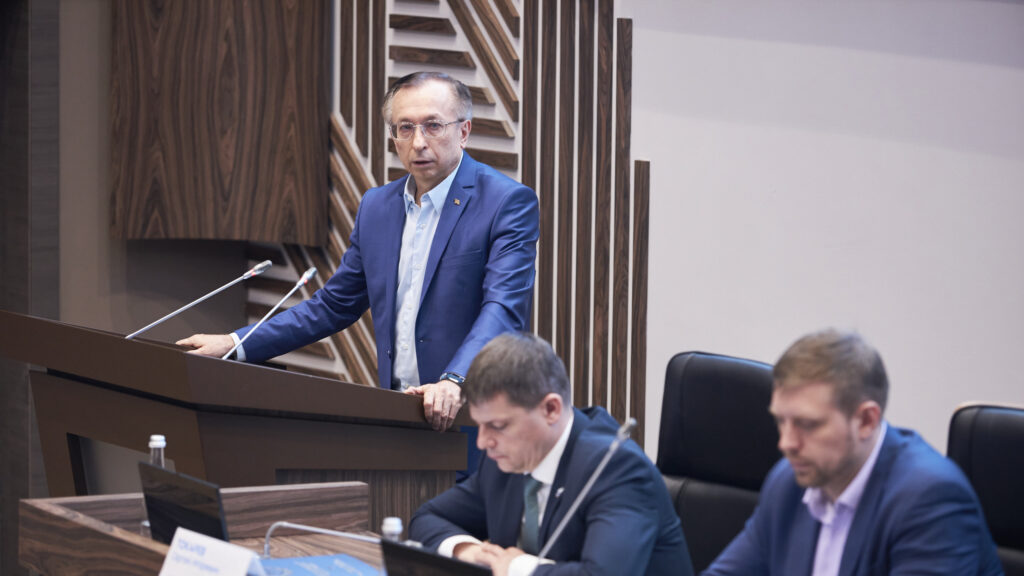
Yuri Hohlov made a presentation “Standardization of the development and use of artificial intelligence technologies: international and domestic experience” in which he conducted a comparative analysis of approaches to the AI standardization at the international and national levels.

After the plenary part, several thematic sections were held in parallel:

  1. Business section “Artificial intelligence: from science to infrastructure and practice”.
  2. Scientific section “BAUM AI: advanced solutions in the field of artificial intelligence”.
  3. Educational section “Artificial intelligence as an object of study in engineering education”.

When preparing the material, the publication https://emtc.ru/news/9677 was used.


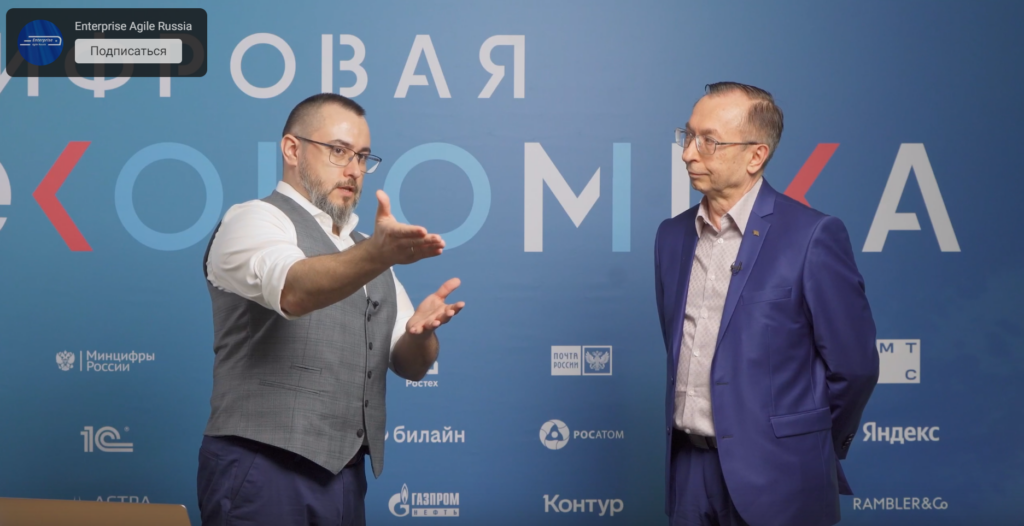
Yuri Hohlov participated in the Enterprise Agile Russia show

The show on the topic “GOV-Agile 2.0” was held in person at the office of ANO “Digital Economy” with the support of GosTech. The show was hosted by Ruslan Yusupov, partner of ScrumTrek.

Experts from the mentioned organizations, as well as from the Analytical Center under the Government of the Russian Federation, the Digital Economy League, RTLabs and the Institute of the Information Society (IIS), recalled the history of the emergence of the GOV-Agile movement and the nomination for agile public administration in the Project Olympus competition in 2015-2020; listed those that appeared in 2020-2022; discussed opportunities for the use of agile approaches in public administration and the development of public information systems; expressed their views on the forthcoming development of agile public administration methods.

All performances can be viewed in video format. For convenience, a time code is indicated before the name of each expert.

00:01:20 Ilya Vinokurov, Deputy Head of the Department for Analysis of National Projects, Analytical Center under the Government of the Russian Federation
The GOV-Agile movement was born in 2015, was supported by the Project Olympus competition in 2016-2019, but since 2020 there have been no new stories or government interest in agile. By 2023, the prerequisites for the revival of this interest appeared, because uncertainty has grown, examples of government contractors have appeared, GosTech has amended Government Decree #676 and issued methodological recommendations. The Analytical Center intends to check the presence of interest and agile management practices through the revival of the corresponding nomination in the competition and hopes for its support from ScrumTrek, FKU GosTech, ANO “Digital Economy” and the Ministry of Digital Development of Russia.

00:16:44 Vladimir Rakhmanov, ex-deputy director of FKU GosTech
GosTech was conceived not only as a platform, but also as a provider of modern public administration practices. Within 1-2 years, the practice of developing governmental / regional information systems will probably appear in federal executive authorities and regional executive authorities, and in 5 years it will probably become the norm. Agencies that migrate to GosTech in the near future will face fewer challenges than those participating in the pilot and will therefore be able to shift their focus from resolving technical challenges to overhauling solution development processes and developing customer-centric practices.

00:27:51 Igor Khomich, expert of the Digital Economy League
Integrators already have accumulated expertise in the transfer of IT solutions for executive authorities to GosTech and continue to do so. At the same time, they have been using flexible approaches in their activities since the late 2000s. Thanks to the provision of a full cycle of training by GosTekh, these practices will become increasingly common in executive authorities and their IT contractors.

00:39:34 Vasily Slyshkin, director of GosTech
GosTech plans to transfer the solutions of about 20 state agencies to the platform by the end of 2023. They will operate in a service paradigm and use agile and client-centric approaches to increasingly show the economic impact of investing in these migration projects. The economic effect, national priorities, import dependence and the impact on the priority areas of the digital maturity of the regions will remain the key criteria for prioritizing decisions for the transfer to the GosTech. The benefits of increasing technological reliability and strengthening information protection, the availability of a knowledge base for the effective implementation of basic scenarios on the GosTech platform, as well as the acceleration of public procurement of cloud services (after changes are made to Federal Law #44) will likely allow an avalanche to speed up the transition of executive authorities to the platform and the spread of their use agile approaches in the development of governmental / regional information systems. This will make it possible to implement unscheduled requirements within months or weeks in rapidly changing conditions through the involvement of representatives of the state customer and development teams in close interaction.

01:04:44 Viktor Redrov, director of the RTLabs Agile-practitioner office
The challenges of 2020 (the pandemic and the need to urgently implement related services) prompted RTLabs to look for an approach that allows it to fulfill its obligations under government orders and simultaneously implement unscheduled requirements. The company adapted the Scaled Agile Framework (SAFe) to its specifics of working with the Ministry of Digital Development – together with the customer, it developed agile contracts, the content of which the customer can regularly adjust in accordance with changing priorities. Transparency is ensured by the joint work of representatives of the state customer and the contractor as part of cross-functional teams. The experience of building the RTLabs production system can be adopted by other companies with 100+ employees as part of interdependent teams. In 2023, RTLabs continues to improve the efficiency of its production system in iterative and incremental manner and is ready to share its experience with the industry.

01:18:24 Alexey Koretsky, RTLabs Production System Implementation Director

01:28:47 Yuri Hohlov, Chairman of IIS Board of Directors
The development of flexible approaches in public administration should be expected primarily from circuits using ML and AI technologies; and the Moscow City Governmnet Department of Information Technology Department is the most experienced and successful testbed. The development of these practices can be facilitated by the appearance by 2024 on the GosTech platform of all tools for working with ML, primarily for use by functional customers in executive authorities in the Low-Code/No-Code paradigm. But for the mass introduction of agile approaches to public administration, it will first be necessary to remove a number of barriers, which presupposes the following: explicitly prescribe in the information society and digital economy development strategies the obligation to base the activities of officials on agile approaches, fix the use of agile approaches in standards, approve methods for calculating the effect of the introduction of agile methods. And when job descriptions are so adjusted, and the amount of time for training staff in their use will increase many times over, it will be possible to involve functional customers in work based on agile approaches. It will mean then that the use of agile methods by Russian civil servants would not only not be forbidden, but even prescribed.

Ruslan Yusupov and Yuri Hohlov

01:48:04 Ilya Vinokurov, Deputy Head of the Department for Analysis of National Projects, Analytical Center under the Government of the Russian Federation
Prerequisites for the use of agile methods by officials: “it is possible” – Government Decree #676, methodological recommendations; “need” – client-centricity in the focus of the state; “it’s not scary” – examples of government agencies that have switched to GosTech. Since now the synonym for “Agile projects” seems to be “digital projects”, therefore, the AC invites ScrumTrek, ANO “Digital Economy”, GosTech, Ministry of Digital Development to become co-organizers of the agile management nomination in the Project Olympus competition. And the final of the competition is proposed to be held in November in St. Petersburg at the IT-Dialogue forum.

01:54:30 Sergey Cheremisin, Director of Regional Digital Development, ANO “Digital Economy”
Taking into account the adoption of the Decree of the President “On the creation, development and operation of state information systems using the unified digital platform of the Russian Federation GosTech”, which prescribes the date of January 1, 2024 for regional information systems to migrate on GosTech and recommends that regional teams, developers and customers dedicate 2023 for preparation for this milestone – to go through training, to understand the issue, and to implement pilot projects.

Source: https://t.me/EntrpriseAgileRussia/830